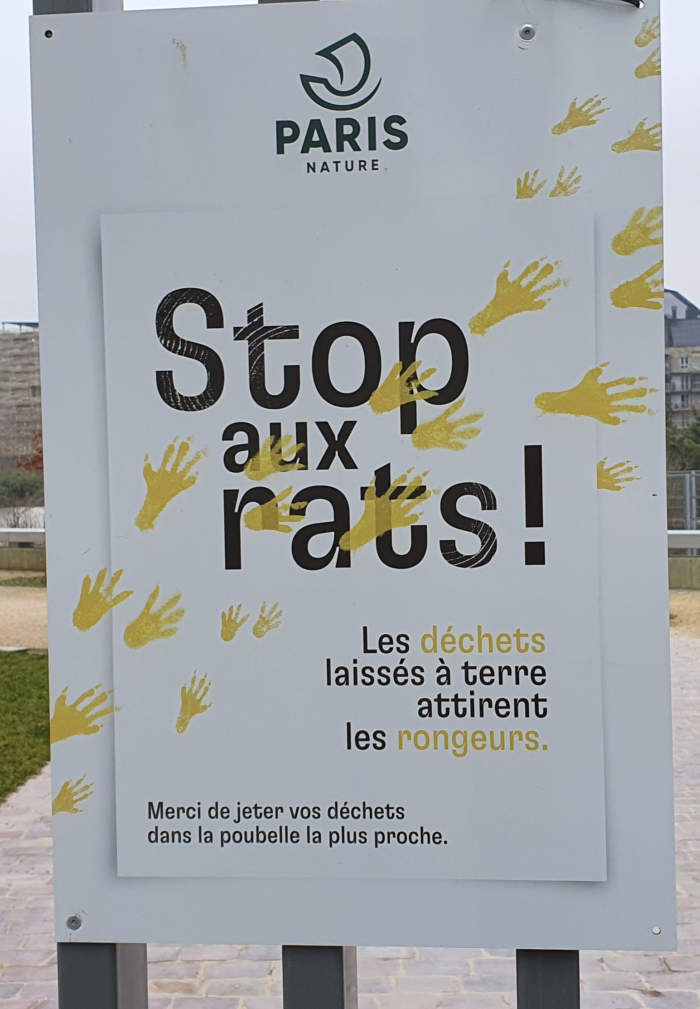
Walking around Paris, you’ve likely seen these signs near parks and gardens that say “Stop aux rats!” Like this one that says: “Garbage left on the ground attracts rodents”
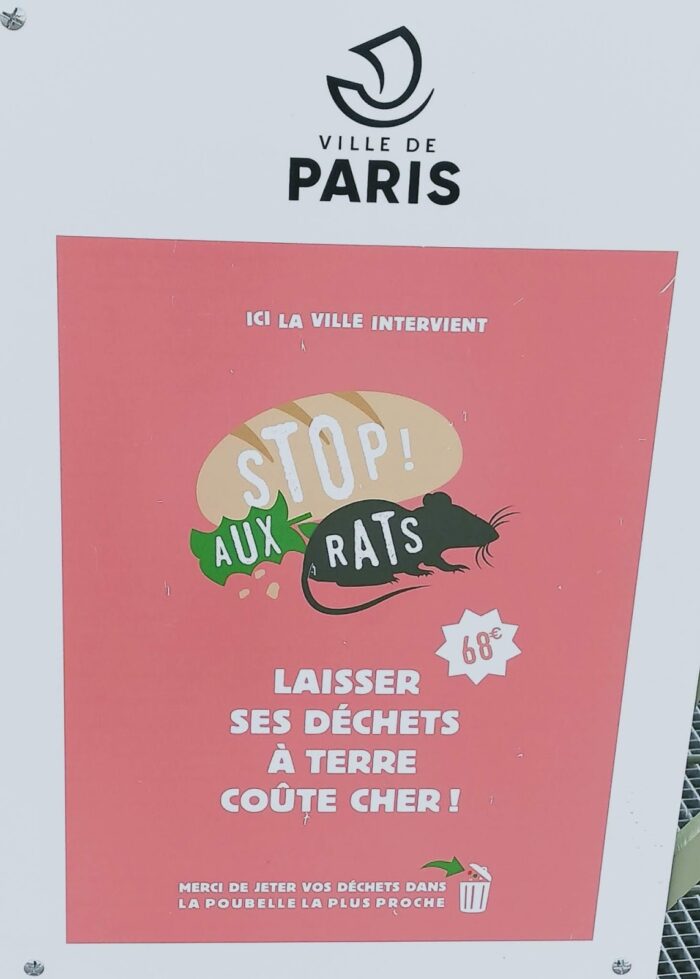
Or this one that says: “Leaving waste on the ground is expensive” and warns of a 68€ fine for littering:
It’s no surprise that Paris has a rat problem, with estimates for the number of rats ranging from 5-6 million. Anti-littering campaigns are only a small part of Paris’ solution for the rat problem. In 2017, Paris began an aggressive rat-extermination policy that relied on better public trash cans and shutting down parks to carry out exterminations. Cracking down on the rat population in Paris isn’t new, as we can see from this scene which mentally scared beloved local chef, Remy from Ratatouille, circa 2007:
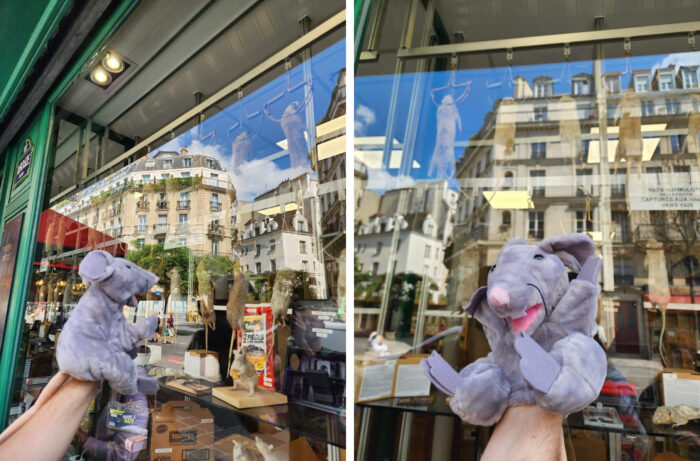
Here we can also see a similar scene traumatizing my new pet rat Jeremy, who I met at the Sewer Museum, to an equal degree:
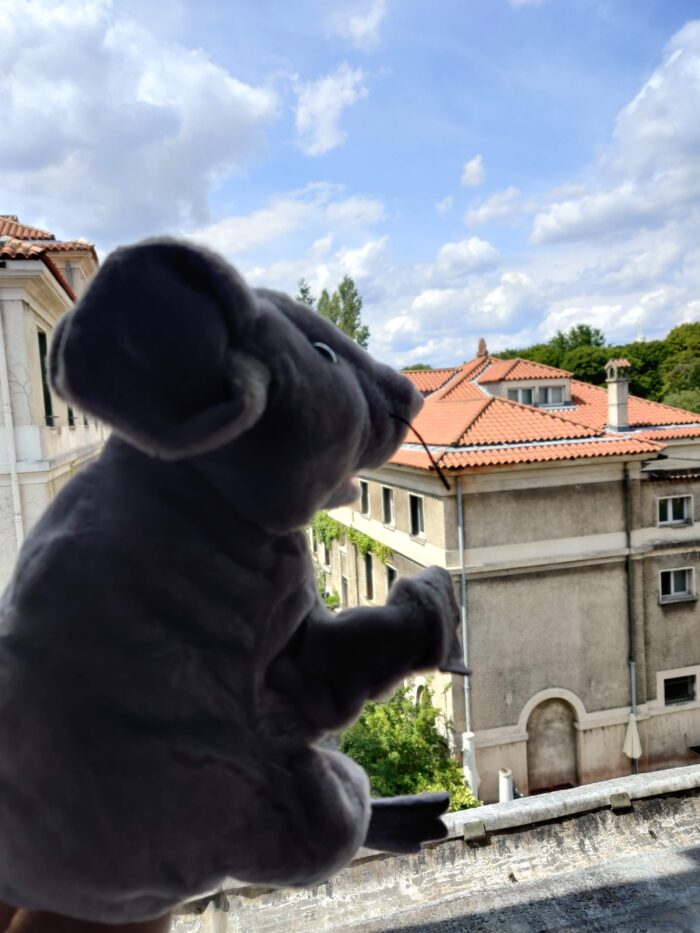
The extremeness of the methods used to exterminate rats has raised some concerns from animal rights activists and the Mayor of Paris, Anne Hidalgo has now called for a end to those practices (also probably because of the costs involved). Many are upset by Mayor Hidalgo’s decision and can’t imagine living together with rats peacefully. To rats like Jeremy, however, this news puts them at ease and gives them hope of a better future:
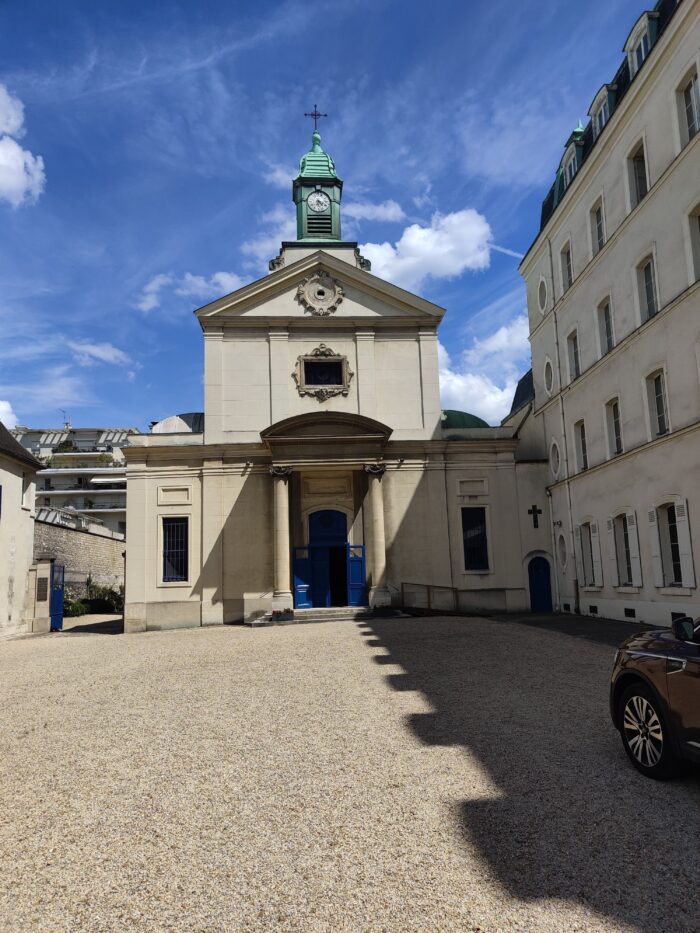
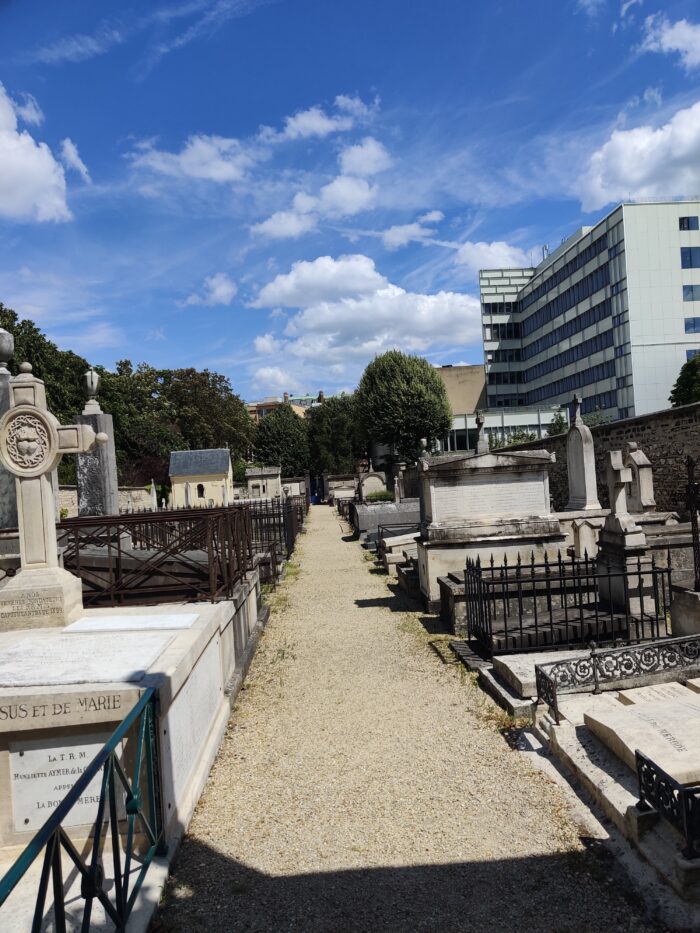
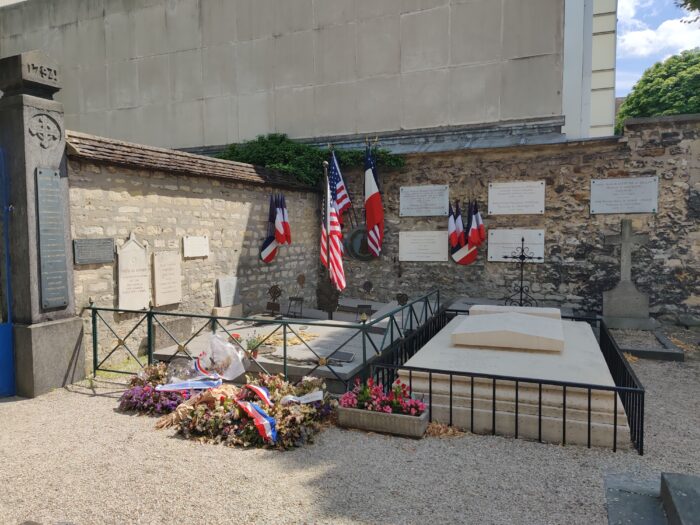
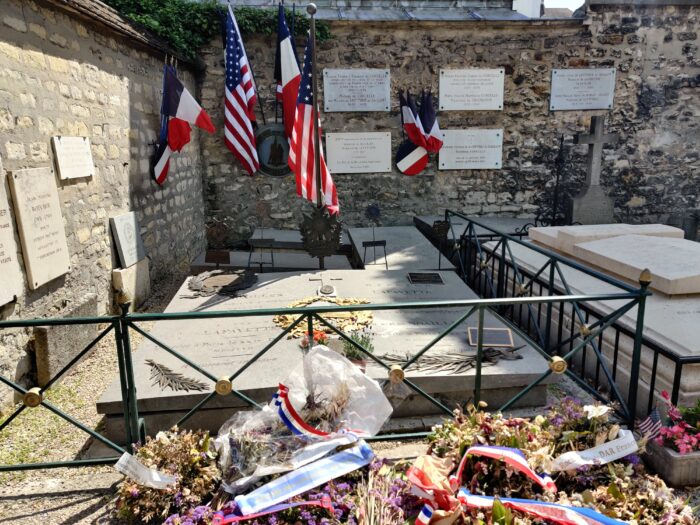
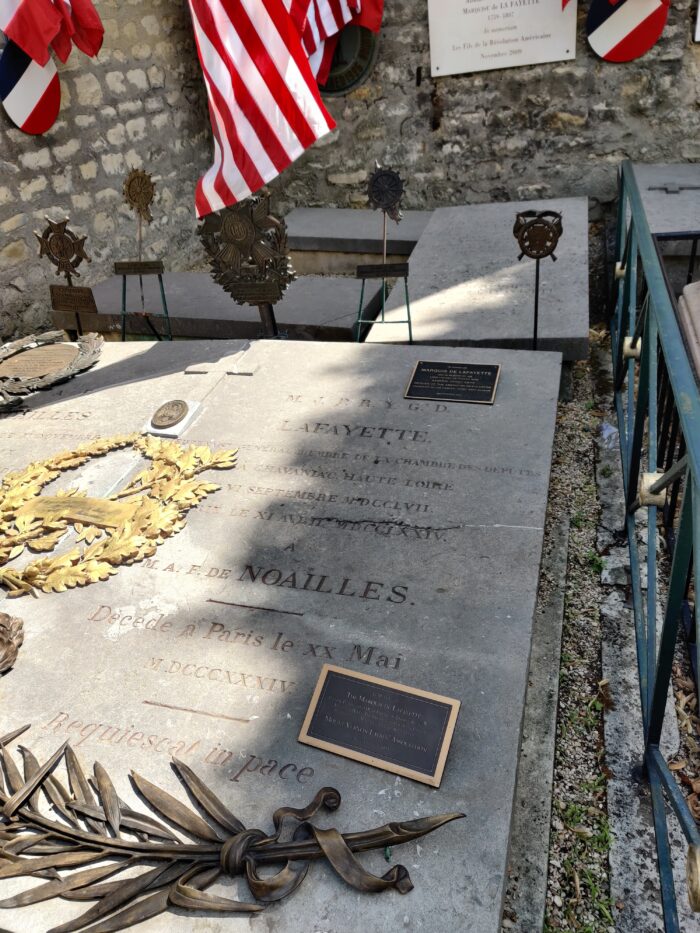
Earlier this week, I went to visit Picpus Cemetery to visit the grave of Gilbert du Motier, Marquis de Lafayette. I was visiting Lafayette’s grave on the request of my parents, who wanted to visit while they were here but missed out. Lafayette’s grave was nice and all, but I found the history of the cemetery to be more interesting.
About 1,300 victims of the Reign of Terror were buried in mass graves in Picpus after being beheaded in the nearby Place de la Nation. Afterwards, the families of the victims found the location of the mass graves and quietly purchased the plots surrounding them. The victims’ families wanted a proper place to mourn and founded a cemetery next to the mass graves, where they could also be buried close to their family members. Because of the unique method by which this cemetery was established, Picpus Cemetery is now only one of two private cemeteries in Paris (which comes with a 2€ entry fee).
If this is a cemetery for the families of Terror victims, then why is Lafayette buried there? Lafayette was buried there to be with his wife, Adrienne de Lafayette, who died some 27 years before Lafayette. Adrienne was actually one of the people who spearheaded the effort to find where the mass graves were dug and buy the land surrounding them. Adrienne’s sister, mother, and grandmother were beheaded and buried in the mass graves during the Terror, and Adrienne herself was meant to be beheaded as well.
Also fun fact: The soil covering Lafayette’s grave was brought from Boston, more specifically, from the site of the Battle of Bunker Hill.
One difference between Paris and even the most dense American cities that jumped out at me is the complete lack of surface parking lots in Paris. Not once have I noticed myself walking along the road and seeing any space on the surface dedicated to parking (excluding street parking of course). It hurts my American brain to see such a lack of parking plainly visible.
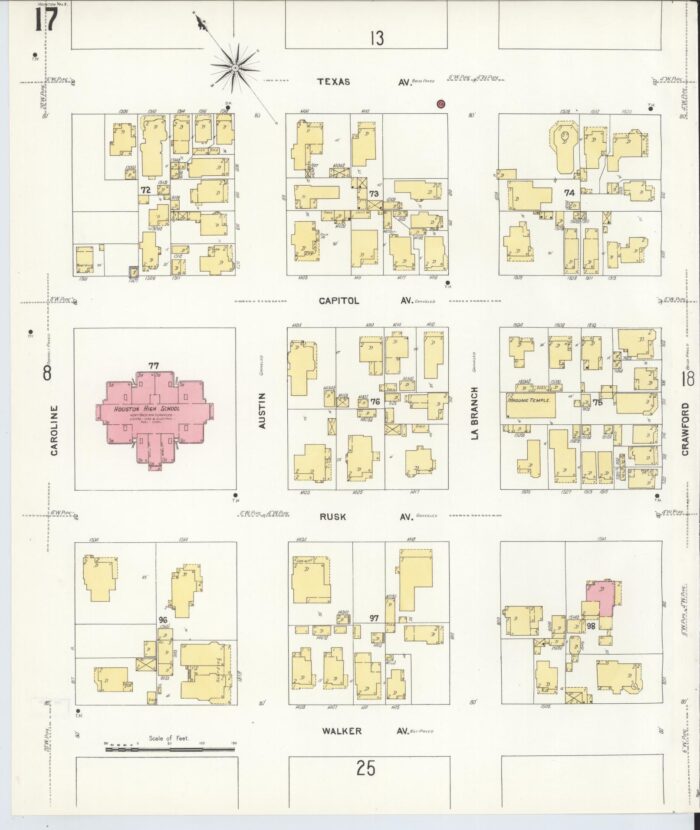
Now, the quick and easy explanation for this that you might hear is that “European cities weren’t built for the car like American cities were” which has some problems. The first problem is that most American cities also weren’t built for the car. They were built like every city before them, for travel on foot, on horse, and later on streetcar. American cities weren’t built for cars, but they did bend over backwards to accommodate them. Take this famous image of the land right next to Houston’s downtown in the 1970s:
For comparison, here’s a Sanborn map from 1907 that I cross referenced with the above image showing what was on some of those blocks before:
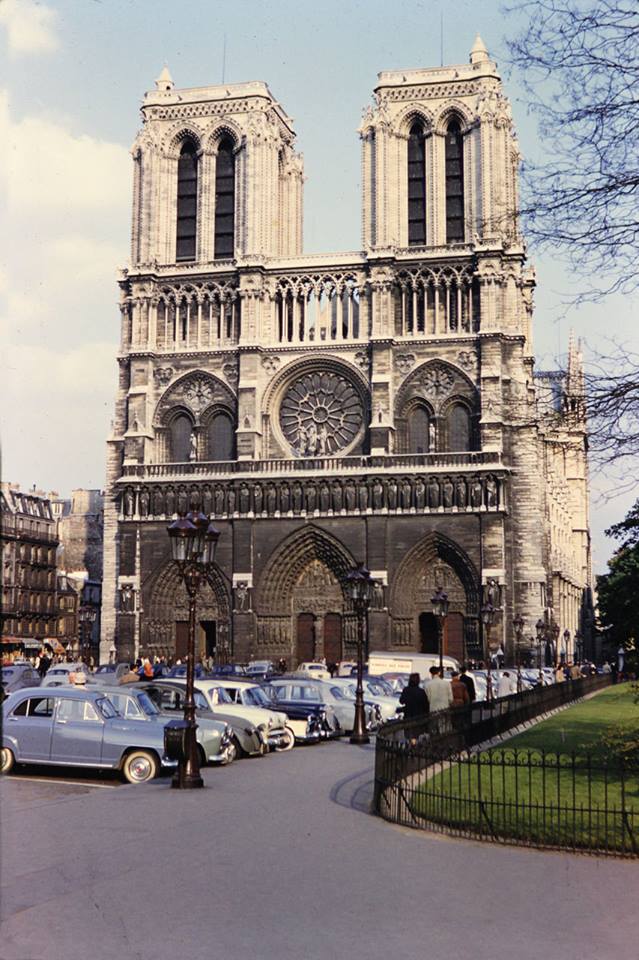
To many, it’s just a fact of life that American cities are built in a more car-centric way than European cities, but it’s important to remember that American cities weren’t always this way. One often overlooked fact is that, just like American cities, European cities accommodated cars too. Imagine going to Notre Dame now and seeing this:
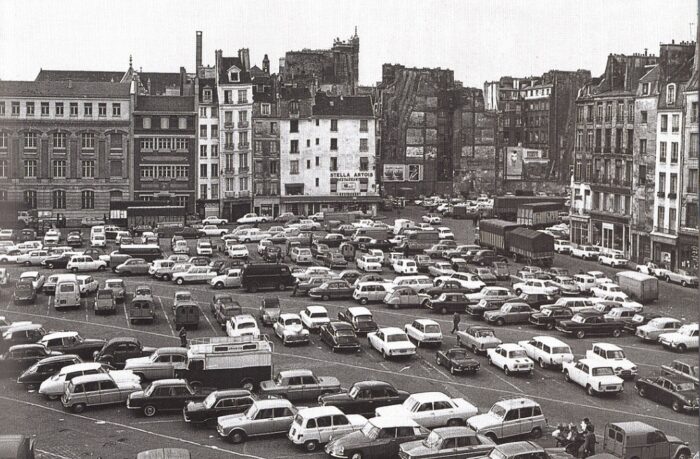
That’s Notre Dame’s parvis in the 1960s. Just like America, European countries experienced a boom in car ownership and thus dedicated more space for cars in their cities. While American cities sprawled outwards postwar, European cities mostly focused on repairing damage caused by the war but not without making accommodations for all those new cars. Bulldozing blocks and leaving them as empty parking lots wasn’t just an American thing; where the Centre Pompidou now stands was once a dense urban block which was razed between 1933-37. The land was then left empty and used as a parking lot until 1969:
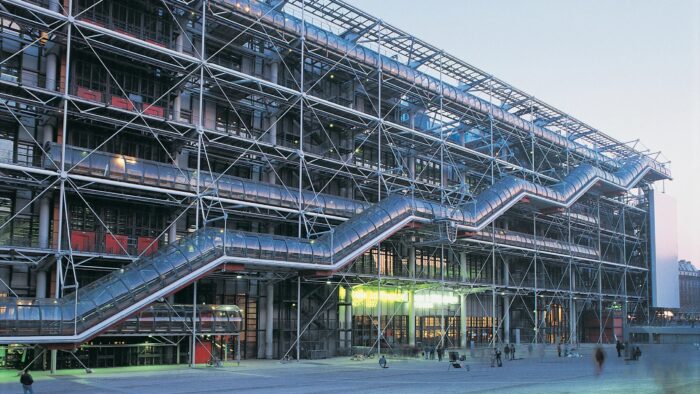
The Centre Pompidou was eventually built on the empty lot, finishing construction in 1977:
American cities today are noticeably very different than European cities, in no small part due to the prevalence of surface parking lots. However, it’s important to not overlook the fact that cities in America were initially designed similarly to those in Europe and the cities in Europe gave in to car-centric design in a similar manner to American cities. European cities like Paris have since taken critical steps through policy to move parking out of sight in a way that American cities fail to. Some reasons I believe European cities have been more successful in this are: 1. Rebuilding post-war hindered the speed at which parking lots could be implemented when compared to America so there were less parking lots to remove when cities decided to remove them. 2. Automotive & oil lobbyists in America had/have a much stronger sway in politics than in Europe, so when the time to remove parking lots came, policy was actually able to move forward in European cities. 3. American parking minimums, which in my opinion really shouldn’t be a thing especially in urbanized areas. Parking minimums place a required minimum number of parking spaces per building based on its use. Most importantly, in some cities these minimums also apply when repurposing an old building to a new use which massively hinders otherwise viable adaptive reuse projects.
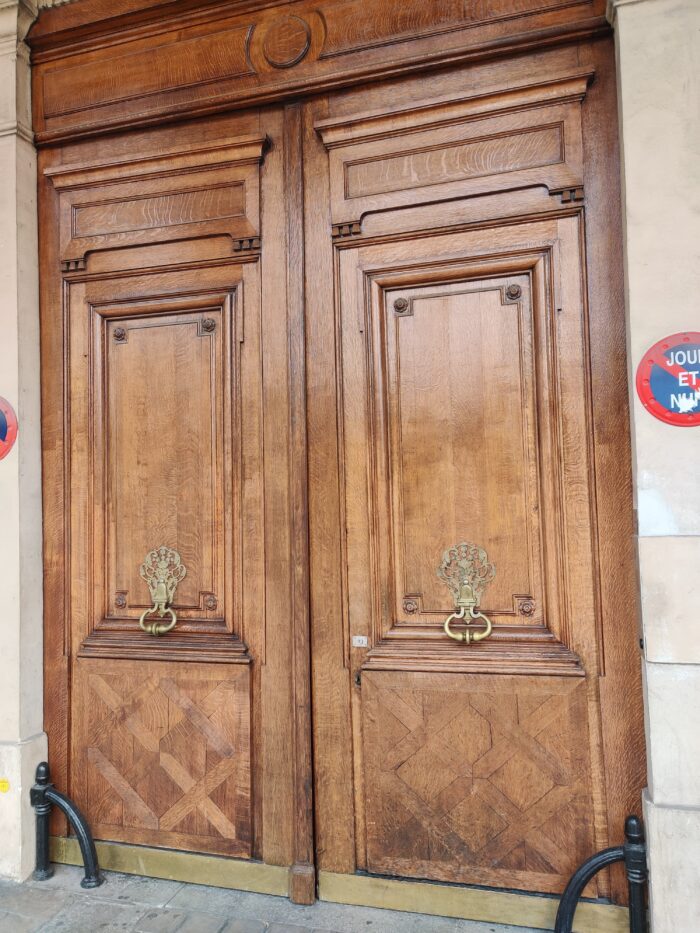
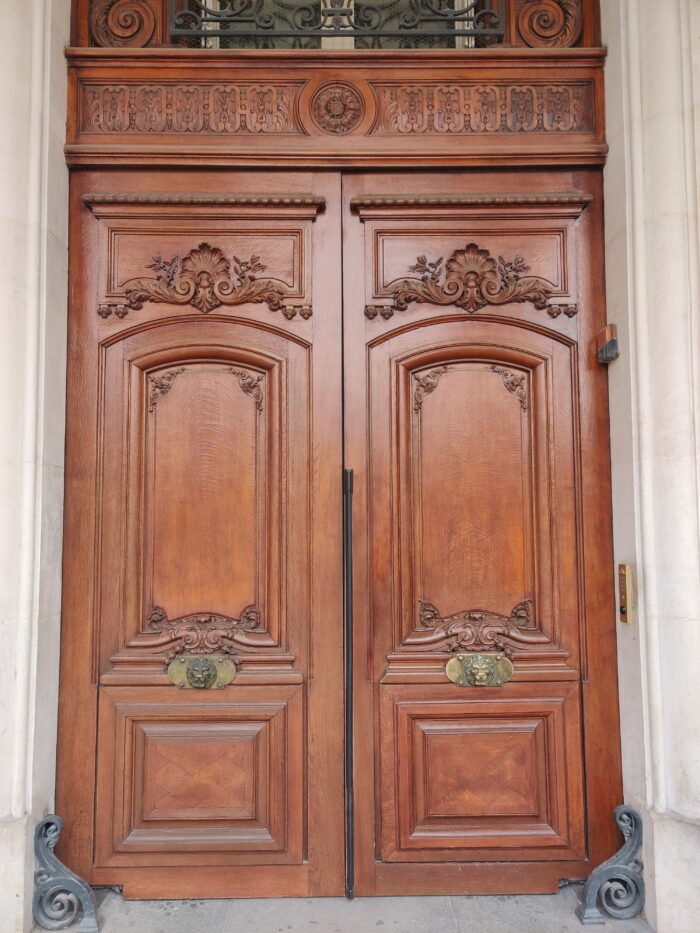
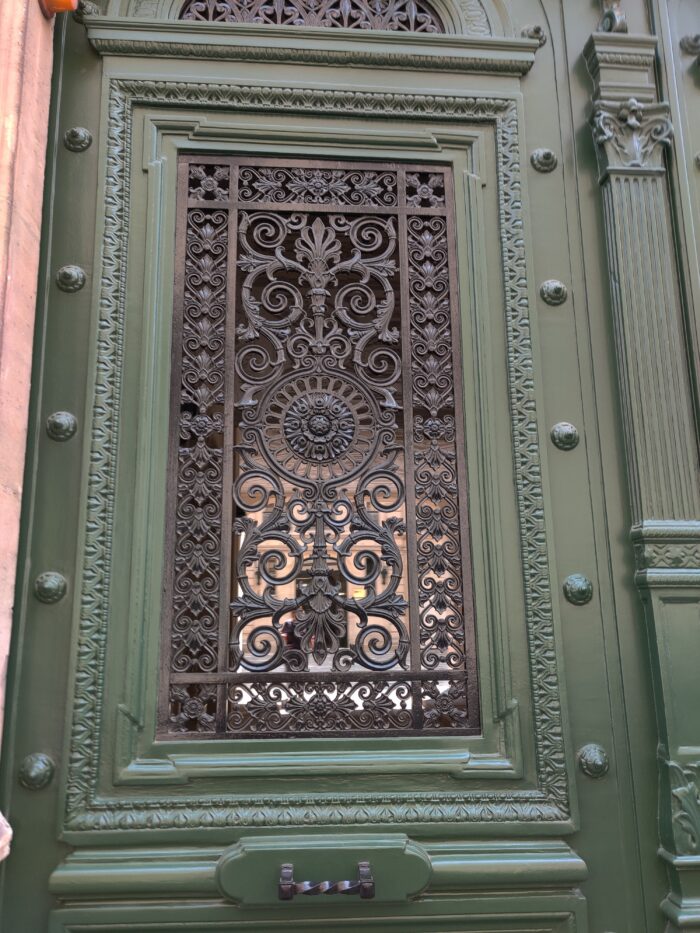
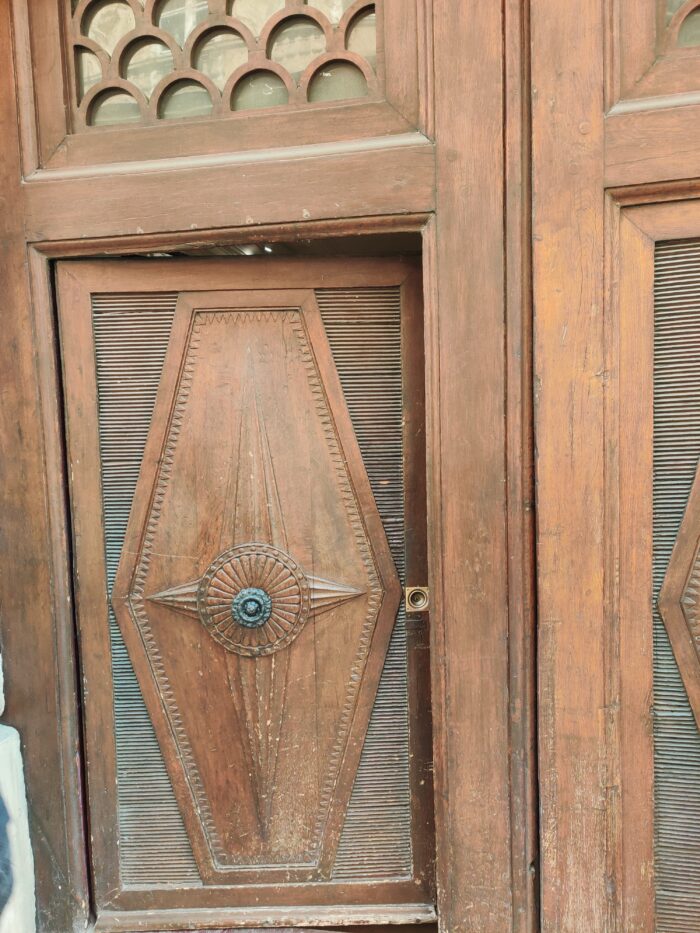
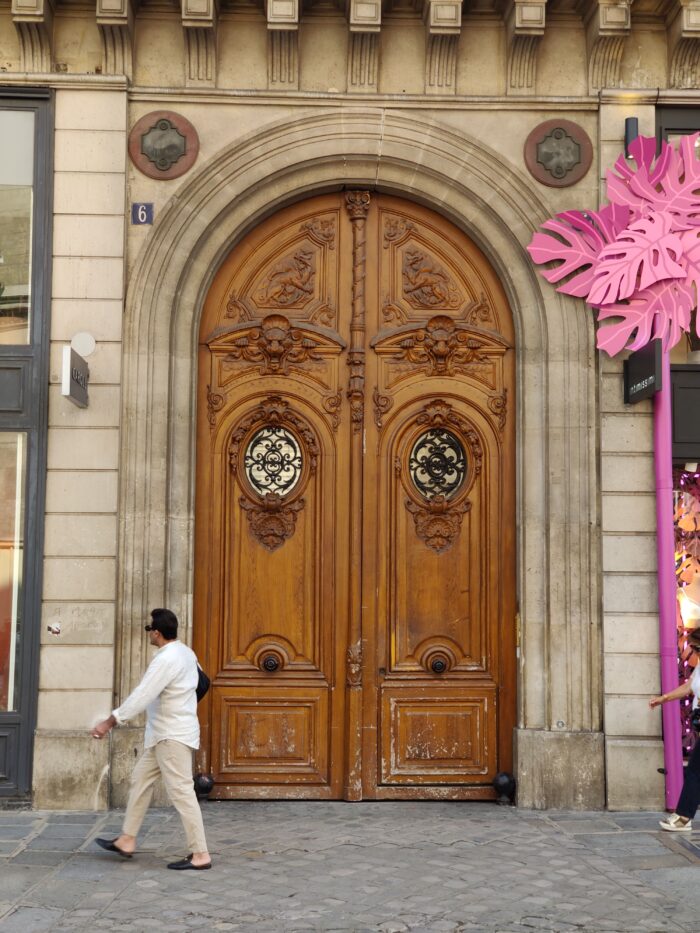
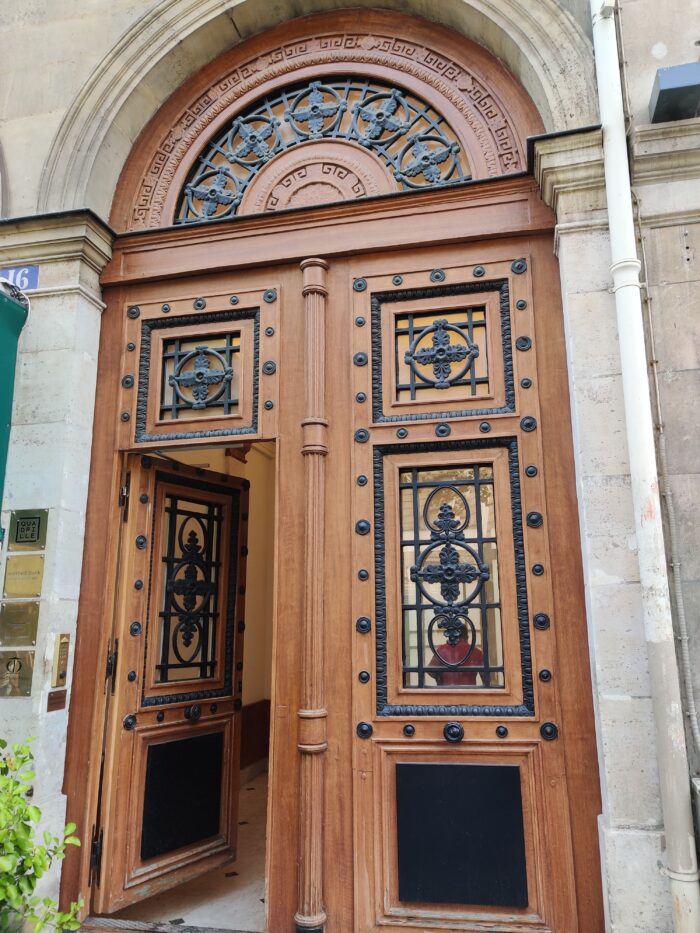
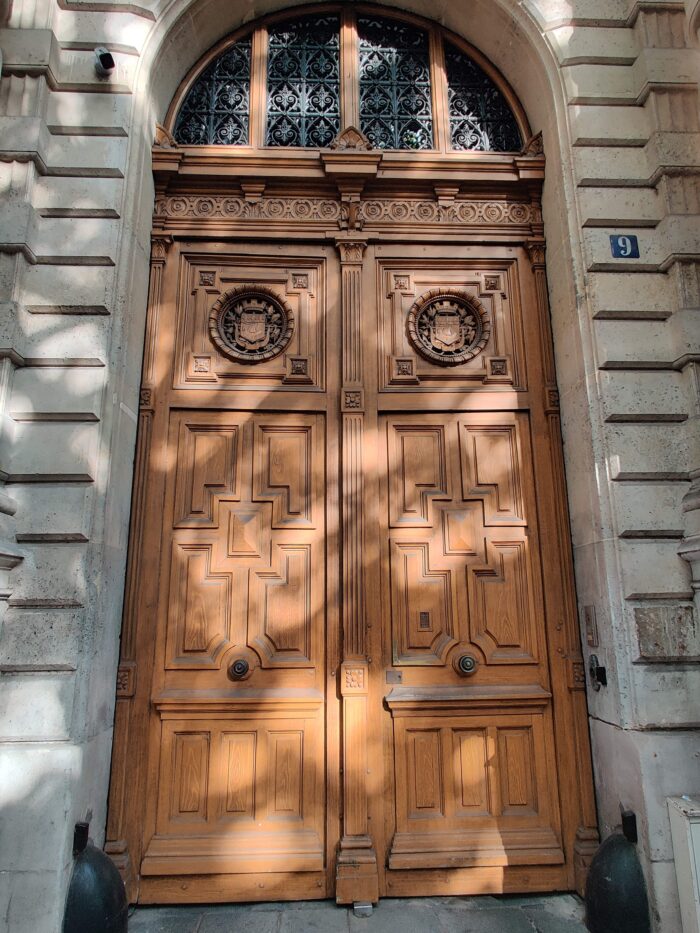
While walking through the streets of Paris, the carriage doors on some buildings have grabbed my attention. These doors provide access to the central courtyards of buildings or building clusters and are wide enough to accommodate horse-drawn carriages, which was their original purpose. An interesting design feature seen on some carriage doors are the small metal or stone thingys on the bottom corners that kind of look like mini-bollards or guard rails. They’re called guard stones or chasse-roues (wheel chasers) and their purpose was to protect the building’s walls from being damaged by the wheels of carriages. If a carriage got its wheels stuck on a guard stone, then it was either too off-center or too large to pass through the passage without banging against the walls.
Like most things in Paris, the form of doors was just as important of a design consideration as their function. It’s no accident that I stopped and took notice of these doors, they’re designed to be noticed. Even if they’re not necessarily saying: “Welcome in,” they certainly are saying: “Look at me.” The material and level of intricacy of the door’s material would’ve been a way for the owner/resident of the building to flaunt their wealth and status. On official buildings, the design of the door is used as an opportunity to engage is some self-describing architecture. For example, one of the doors pictured below has the Paris City Crest on it which makes sense since that building is on the Île de la Cité and (probably. I couldn’t confirm the building’s use) houses government offices. Lions are a popular design element that I’ve seen in doors, likely due to the generals symbolism behind lions being popular and it lets passers-by know just how regal and important you are (or want to be).
The door of a buildings is a design element that nearly everyone who walks by will see from street level. Even if they can’t see the whole building, everyone who walks by is likely to see its door and everyone who enters is guaranteed to see its door. It’s no wonder then, that building designers and/or owners would use the door to project something about themselves and their building.
250 Rue de Rivoli244 Rue de Rivoli4 Rue Saint-Florentin6 Rue Saint-Florentin6 Place Jacques Rouché16 Place de la Madeleine9 Boulevard du Palais
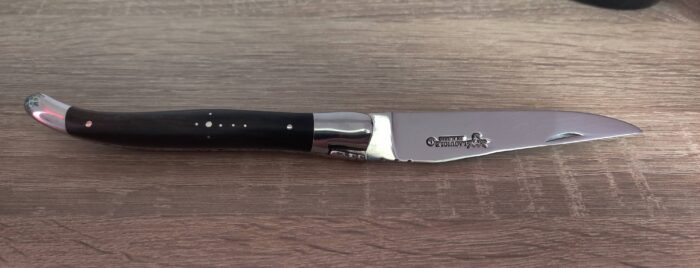
On Monday, I stopped by a Laguiole knife store on Île Saint-Louis and bought myself a knife (pictured below).
After appreciating the craftsmanship of the knife, I looked into the origins of this style of knife in France.
Laguiole knives are a style of folding knife named after the town of Laguiole, located in Occitania about 289 miles / 465 kilometers from Paris. Laguiole knives were being produced in the early 19th century, but their popularity took off around 1860. Larger scale production began in the town of Thiers, which has a history of cutlery production.
The style of knife was thought to have been introduced to southern France by shepherds from Catalonia who would migrate seasonally between northern Spain and southern France and Laguiole style of knife remained popular with shepherds. There is a story that explains the cross-shaped pins in the knife grip (seen in first photo) as being used by shepherds as a means to pray while out in the wilderness with their flocks. This story is just a myth and the design is just an aesthetic choice.
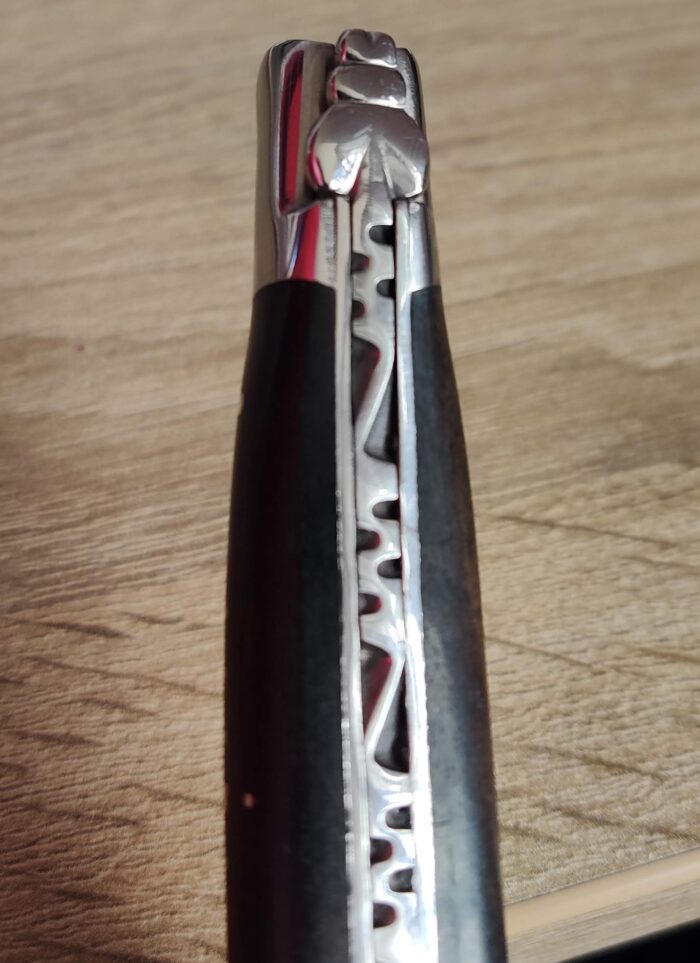
Another interesting design feature is the bee (or fly) motif on the spring of the knife joint (seen in second photo). The technical term for the flattened part at the end of the spring in French is “la mouche” (the fly) so usually the spring is decorated with a fly. Bees are also very common to depict on the spring because of their association with Napoleon.
Today, Laguiole knives are produced around the world as they are very popular, but authentic production continues in Thiers and Laguiole. I definitely recommend you buy one for yourself if you like knives or as a gift for someone who does.